
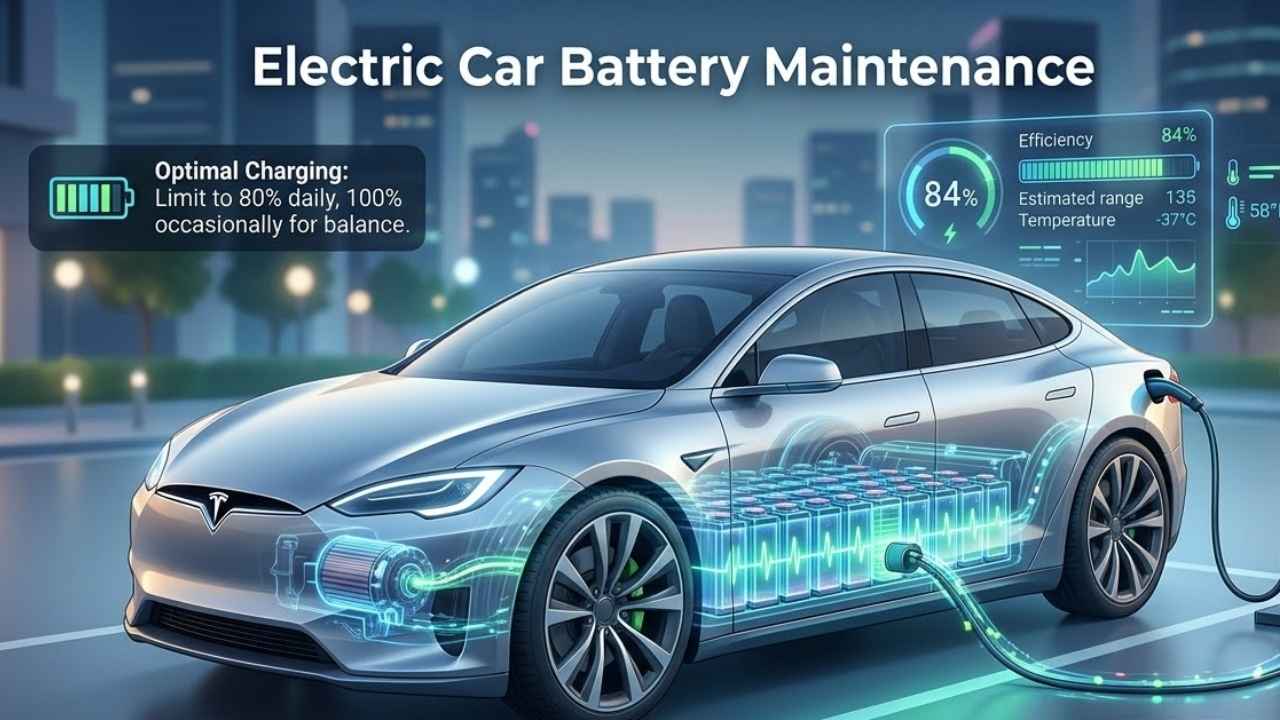
Did you know that most electric vehicles use lithium-ion batteries that can last between 8–15 years with proper care? But if you know the Electric Car Battery Maintenance Tips you can improve your EV battery life and can save your money too.
If you own an electric vehicle, you’re already a step ahead toward a smarter and greener future. In this article, we will explore simple and effective EV battery maintenance tips to help you extend its life and performance.
In this modern era, everyone is shifting towards electric vehicles, but one important thing people need to understand is how to maintain an electric car battery to increase its lifespan. Every hour in India, around 15 to 20 EV cars are sold, yet many people are still not aware of proper electric car battery maintenance. In fact, most EV owners do not have enough time or knowledge to take proper care of their batteries.
Electric Car Battery Maintenance Tips
After 2018, the production of electric vehicles in India increased rapidly, and the numbers continue to grow. This is a positive change, as EVs help reduce pollution and save money on petrol and diesel. However, many people do not read the battery manual or documentation when buying a new EV. To improve battery life, it is important to understand and follow proper battery maintenance tips.
EV owners need to avoid frequent fast charging, ensure that their battery is not overheating, avoid leaving their EV on charge for long periods, keep the software updated, and always use company-approved batteries.
However, if you don’t know the proper way to maintain your car’s battery, owning an EV can become costly. Wondering how? If you don’t take care of the battery, it may degrade faster, and you might have to replace it by paying a high amount again. So, here are some important tips you must follow.
Avoid Frequent Fast Charging
Have you ever noticed that our mobile phones often heat up while charging, especially when using a fast charger? The same thing happens with electric vehicles. Companies offer fast chargers for convenience and to save time, but frequent use of fast charging can generate excess heat, which may negatively affect the battery’s lifespan
So, always charge your EV battery using a normal (slow/AC) charger whenever possible, and use fast charging only when necessary.
Heat is Your Battery’s Biggest Enemy
Everyone knows that if your battery heats up rapidly, even after driving just a few kilometers, something is wrong. So, always check your vehicle’s battery regularly, and if it starts overheating, make sure to get it inspected and serviced by a professional immediately.
To avoid battery heating issues one can follow the tips listed below:-
- Avoid frequent use of fast charging.
- Do not charge your EV immediately after long drives.
- Park your vehicle in shade or cool places.
- Keep battery charge between 20% to 80%.
- Avoid aggressive driving and high speeds.
- Regularly check battery condition and alerts.
- Use only company-approved chargers.
- Keep your EV software updated.
- Do not overload the vehicle unnecessarily.
Don’t Leave Your Car Fully Charged for Long
EV owners often make the mistake of leaving their vehicle on charge even after it is fully charged. Although companies provide features like automatic cut-off after full charge, keeping the battery at 100% for a long time can still affect its health. This habit can slowly reduce battery efficiency and lifespan over time.
So, to avoid such issues, set alarms or regularly check your vehicle while charging, and unplug it once it reaches the desired charge level.
Keep Software Updated
Software updates play a major role in maintaining battery life, as we all know that EVs are highly automated and operate through advanced software systems. Regular updates help improve battery management, optimize performance, and ensure better efficiency over time.
Use Regenerative Braking Smartly
Regenerative braking is a smart feature in electric vehicles that helps convert braking energy into electricity and sends it back to the battery. By using this feature properly, you can improve your EV’s efficiency and reduce unnecessary battery strain.
- Use regenerative braking in city traffic and stop-and-go conditions.
- Avoid sudden hard braking; instead, slow down gradually.
- Drive smoothly to maximize energy recovery.
- Learn and adjust regen settings if your EV offers different modes.
- It not only saves battery but also reduces wear on brake components.
Don’t Let Battery Sit Idle for Too Long
If you are not using your EV for a long time, don’t let the battery sit idle for too long. It can directly affect battery life because lithium-ion batteries slowly lose charge when left unused, and staying at very low or very high levels for long periods can cause degradation.
In such cases, avoid manually disconnecting the battery wires. Instead, maintain the battery charge between 40%–60% and check it periodically to keep it in good condition.
Always Use Company-Approved Batteries & Parts
This is one of the most important points, always use company-approved batteries and parts for better performance and safety. Genuine components are specifically designed for your EV, ensuring proper compatibility, longer battery life, and maintaining your vehicle’s warranty.
As we all know, due to the high demand for batteries, some companies produce fake or duplicate copies using low-quality materials. These can be harmful to your EV, affecting performance, reducing battery life, and even causing safety risks.
Bonus Tip: Warranty Awareness
One of the most important tips everyone should know is warranty awareness. Most EV companies offer a warranty on their batteries, so it’s essential to understand the terms and coverage. If you are aware of your battery warranty, you can save a significant amount of money in case of any issues or replacements.
For this, you need to have the proper documents or battery-related papers, and your battery must meet the conditions set by the company. Only then can you claim the warranty benefits without any issues.
Advantages and Disadvantages of Electric Cars
If you ask me the pros and cons of EVs, then I will say EVs have more advantages than disadvantages. As electric vehicles run on electricity, they help reduce air pollution and keep the environment clean. While running on the road are smooth and quieter which reduce sound pollution. The advantages not only stops here, it is cheaper than fueling a petrol and diesel car, low maintenance, lower running cost, etc.
If we talk about its disadvantages then, the cost of buying an electric car can be higher than regular vehicles. The charging infrastructure is still developing in many areas. Charging can also take more time compared to refueling with petrol or diesel. The battery replacement can be expensive if not covered under warranty in many cases. If you are planning to drive for a long ride then you have to think twice. But with proper planning and maintenance, these drawbacks can be managed easily.
