Owning an electric car is smart, but how you charge your EV is just as important as how you drive it. Yet, many EV owners still don’t fully understand the correct way to charge their vehicle. If you own an EV or are planning to buy one, this post is for you. Today, we’re going to explore the best electric car charging practices and help you avoid costly mistakes that can affect your battery life, performance, and overall running cost.
Electric Car Charging Best Practices
Do you charge your EV regularly and have you ever wondered if you’re doing it the right way? Most people simply plug in their EV and walk away without thinking much about the charging process. However, experts suggest that proper charging habits play a crucial role in maintaining battery health and performance.
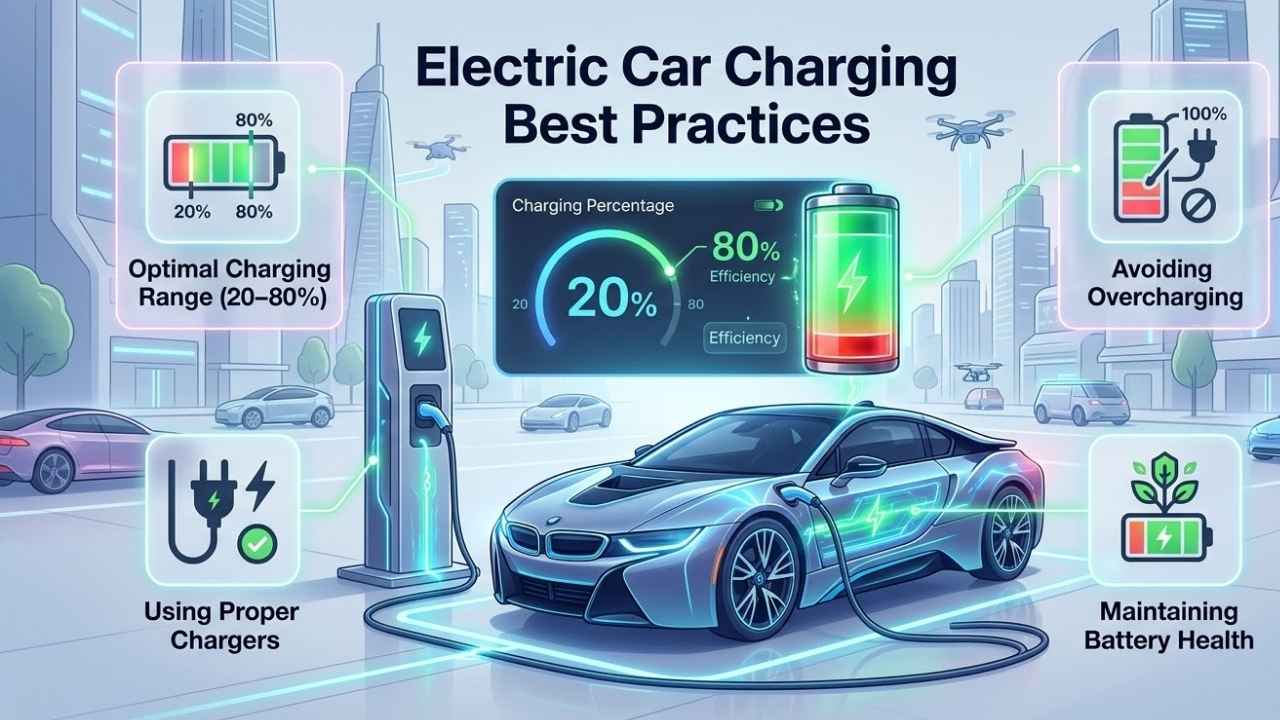
While charging your EV, you should avoid frequent fast charging, keep the battery temperature in check, and avoid overcharging or leaving it plugged in for too long. It’s also important to use a good-quality charging cable to ensure safety and efficiency. By following these simple practices, you can extend your battery life and avoid unnecessary costs in the long run.
Charge Between 20% and 80%
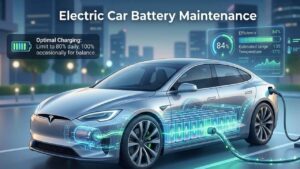
Many people believe in charging their EV to 100% and only plugging it in when the battery drops below 1%. Following this practice can drain your EV battery faster and reduce its overall lifespan. So, to maintain your EV’s battery health, it’s best to keep the charge level between 20% and 80%.
Avoid Frequent Fast Charging
Yes, frequent fast charging is also not the correct way, as it can put unnecessary stress on your EV’s battery. While fast chargers are convenient and save time, using them regularly generates excess heat, which can gradually affect battery health and reduce its lifespan. Over time, this habit may lead to lower efficiency and reduced driving range.
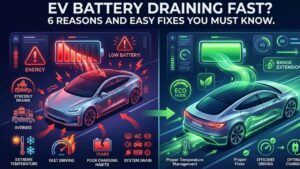
Also Read: EV Battery Draining Fast? 6 Reasons and Easy Fixes You Must Know
Fast charging should ideally be used only when you’re in a hurry or on long trips. For daily use, it’s always better to rely on normal or slow charging, as it is safer, more stable, and helps maintain the battery’s long-term performance.
Keep Battery Temperature in Check
As we all know, if the temperature of the EV battery increases while charging, it can affect its overall health and performance. High heat puts extra stress on the battery and can slowly reduce its efficiency and lifespan over time.
That’s why it’s important to avoid charging in extreme heat and to let the battery cool down after long drives before plugging it in. By keeping the battery temperature under control, you can ensure better performance and longer battery life.
Don’t Overcharge or Leave Plugged In Too Long
Usually, people plug in their EV overnight or leave it connected for a long time without checking if the battery is fully charged or not. In such a case it may seem convenient, keeping the car plugged in even after it is fully charged can put unnecessary stress on the battery. It’s good to use timers or smart charging alarms to stop charging at the right time and protect battery health.
Use a Good Quality Charging Cable
Sometimes you notice issues like short circuits or higher electricity bills, and the reason can often be a poor-quality charging cable. Using a low-quality or damaged cable can affect charging efficiency and may even be unsafe. It’s always better to use a good-quality, certified charging cable that ensures stable power flow and protects both your EV and your home electrical system.
Common EV Charging Mistakes You Must Avoid
Here are a few common mistakes that most EV users make while charging their vehicles. These small habits may seem harmless, but they can affect battery health, performance, and overall cost over time.
- Letting the battery drop to very low levels (0–1%) frequently.
- Using fast charging too often.
- Charging the EV in extreme heat or cold conditions.
- Leaving the car plugged in for too long after full charge.
- Using a low-quality or damaged charging cable.
- Not following a regular charging routine.
- Ignoring battery temperature while charging.
Best Way to Charge Your EV for Maximum Battery Life
To charge your electric vehicle safely at home, you should first ensure that your power supply provides sufficient and stable voltage for proper charging. Once you plug in the charger, it’s important to stay alert for a few minutes and observe the process.
Make sure the battery is not overheating and that the electricity flow remains stable without sudden fluctuations. Taking these simple precautions can help prevent damage, ensure safe charging, and improve your EV’s overall performance and lifespan.